Use a rate for each format
A different bottle volume may change filling duty, handling speed and the downstream pack rate. Request a separate performance row rather than carrying over the 500 ml rating.
Factory planning for water bottling projects
Machines connected as one plant
Choose the machinery for the finished bottle and shipping pack you need to produce. A still-water PET plant connects water preparation, bottle supply, rinsing-filling-capping, labeling, coding, packing and conveyors. The bottle-supply route determines whether blowing equipment is needed; the label, pack and handling method determine the downstream machines.
Answer first
For still water in PET bottles, cover treatment and storage, bottle feeding or blowing, rinsing-filling-capping, labeling, coding, packing and conveyors. Choose auxiliaries and utilities for those machines. Purchased empty bottles remove onsite blowing; purchased preforms do not. Returnable jars require their own inspection, washing and handling route.
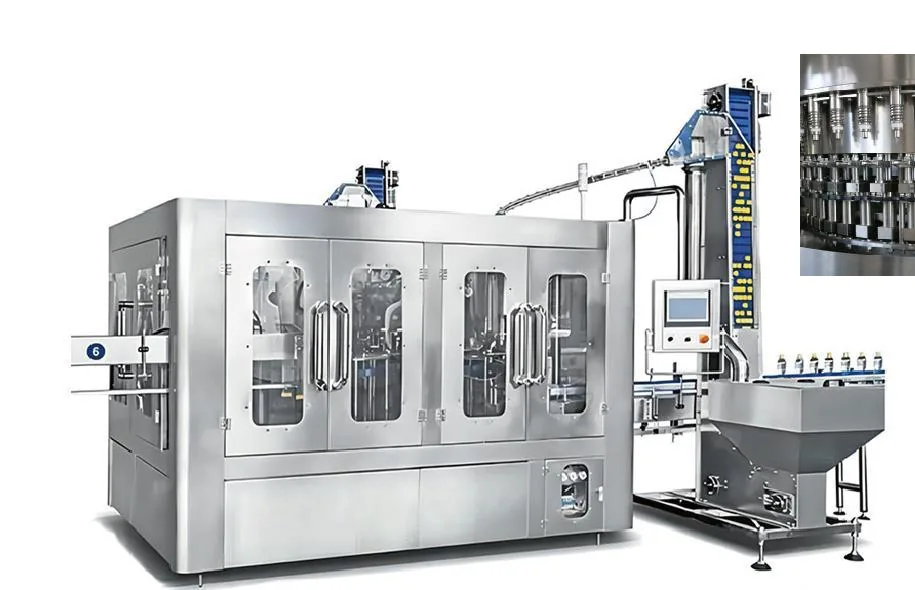
Equipment references from the 2026 catalog
These are representative Allot Tech catalog images. Final models, performance and interfaces remain project-specific and follow the signed technical scope.
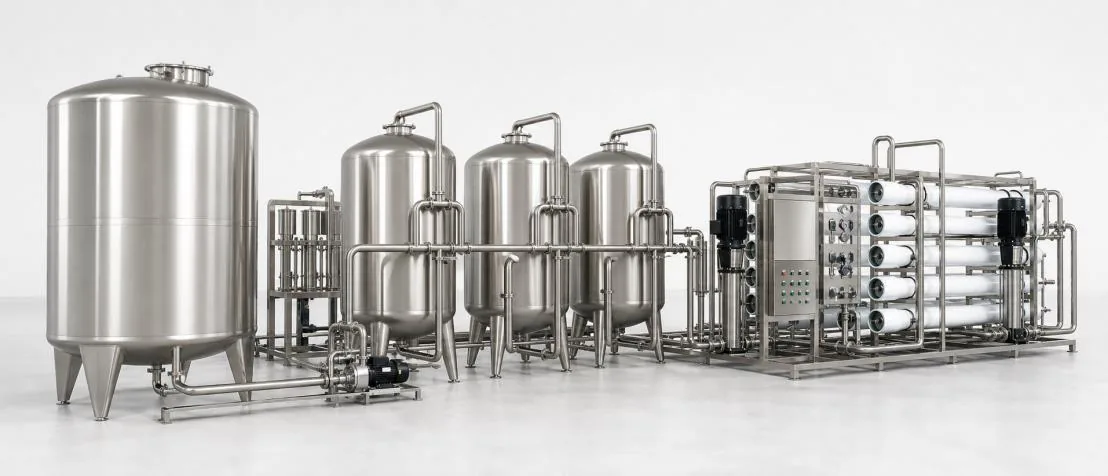
Select the process from source-water evidence and the intended bottled product. Include hygienic storage and transfer.
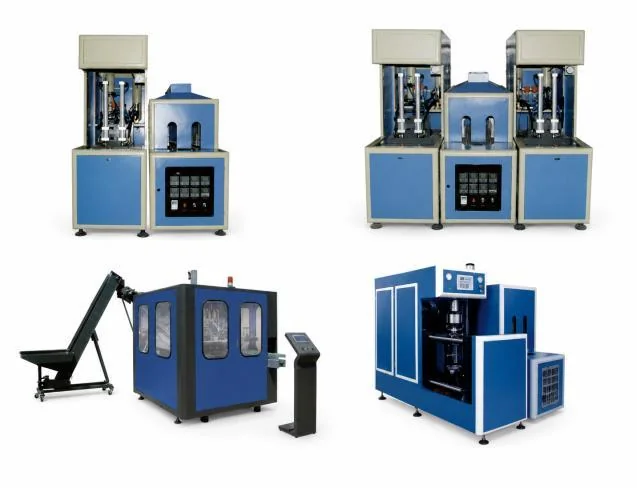
Onsite blowing converts preforms into bottles. Buying finished empty bottles removes this production step and changes the storage requirement.
Match the bottle, neck, closure and product to the filling configuration. Confirm format-specific output and handling parts.
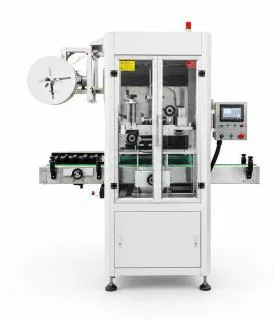
A sleeve applicator is one labeling route. Choose sleeve, wraparound or self-adhesive equipment from the approved bottle and label specification.
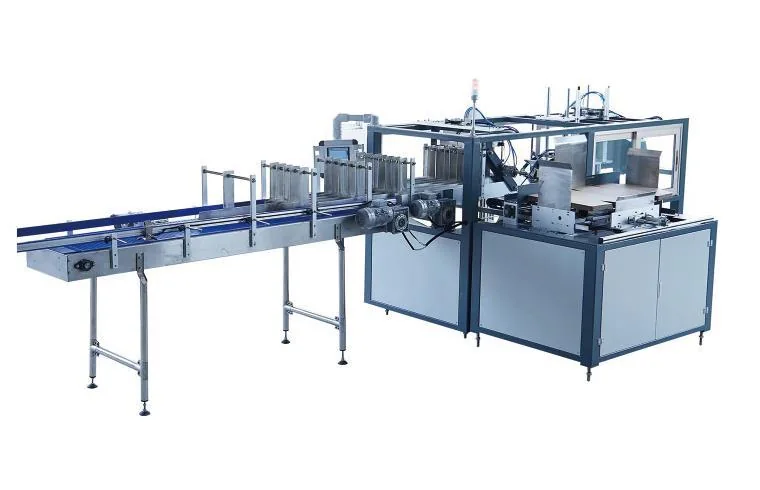
Choose the finished pack before selecting grouping and wrapping equipment. Convert packs per minute into bottles per hour for line balancing.
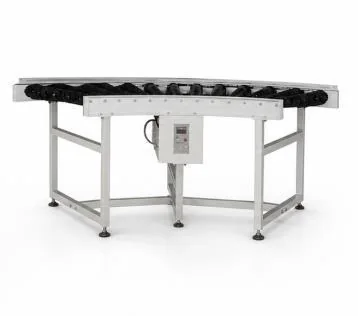
Specify bottle and pack transfer points, short-stop buffers, control signals and downstream collection.
01
These are configuration routes for discussion. They show what changes at factory level; the selected equipment list and service scope belong in the project quotation.
| Plant route | Production machinery | What changes around the line | Best starting condition |
|---|---|---|---|
| Still water in purchased PET bottles | Bottle feeding, rinsing-filling-capping, labeling, coding, packing and conveyors; treatment and storage follow the water basis | Empty-bottle receiving, protected storage and replenishment replace preform storage and blowing utilities | A dependable bottle supply exists and the factory can accommodate bulky empty-bottle stock |
| Still water with in-house PET blowing | Add preform feeding, blow molding, molds and transfer to the selected filling and packing route | Add the specified compressed-air and cooling packages, preform logistics and blowing maintenance capability | Bottle volume, sourcing economics and format control justify operating a blowing package |
| Returnable large-container water | Container inspection, the selected washing process, filling, capping and compatible discharge handling | Separate returned-container intake from clean-container movement; plan washing services and effluent | The business operates a return-and-refill distribution loop with defined container and cap specifications |
| Expansion using existing equipment | Keep compatible assets and add the missing or limiting modules | Adapt transfer heights, handling parts, controls and utility distribution; include the installation shutdown | Existing machine records and operating checks show that reuse supports the new duty |
02
Use this schedule for a still-water PET concept. It lists functions to cover, not a promise that every item is included in a standard package. Existing assets may satisfy a function after their duty and condition are verified.
| Equipment or package | What to select it for | Items to include or assign |
|---|---|---|
| Water treatment and hygienic storage | Source-water analysis, intended product and product-water demand | Treatment process, tanks, pumps, instruments, sampling, cleaning and transfer piping |
| Bottle supply | Purchased bottles or onsite production from preforms | Feeding/unscrambling and protected storage, or blower, preform feed, molds, specified air/cooling and bottle transfer |
| Rinsing-filling-capping | Actual bottle geometry, neck, closure and still-water filling duty | Cap feeding, handling parts, product connection, cleaning interfaces and discharge conveyor |
| Label application | Sleeve, wraparound or self-adhesive label and bottle surface | Applicator, required tunnel or adhesive system, material feed and any specified surface drying |
| Date and batch coding | Print location, substrate, readable content and line speed | Coder, mount, trigger, product detection and inspection method |
| Secondary packing | Bottles per pack, shrink bundle, tray or carton | Grouping, wrapping/carton handling, tunnel or sealing equipment and material replenishment |
| Conveyors and finished-pack handling | Transfer geometry, accumulation and warehouse route | Bottle/pack conveyors, controls, reject collection and selected pallet handling |
| Utilities and cleaning support | The selected machines and cleaning procedures | Generation, distribution, connection points, drainage and local installation; allocate each separately |
03
Select one compatible route for each launch format. A sleeve applicator and a pack shrink wrapper perform different jobs; selecting one does not cover the other.
| Choice | Useful selection basis | Compatibility check before order |
|---|---|---|
| Shrink sleeve label | A sleeve around the bottle body or neck is part of the approved artwork | Bottle shape, sleeve material and lay-flat dimensions, shrink behavior, tunnel services and code visibility |
| Wraparound label | A label wraps around the designated bottle panel | Panel geometry, label dimensions and material, adhesive method and seam position |
| Self-adhesive label | Pre-cut labels on a backing liner match the selected presentation | Application panel, label roll direction, peel/placement accuracy and surface condition |
| Film shrink bundle or tray plus film | The distribution plan accepts the selected bundle and handling arrangement | Bottle stability, pack pattern, film, tunnel conditions, handle/tray needs and pallet load |
| Carton pack | A carton is required for the selected distribution route | Bottle grouping, partitions if needed, carton dimensions, erection/loading/sealing and supply logistics |
04
Illustrative arithmetic only, not a machine rating or performance promise. Assume a filler and labeler can each process 6,000 bottles/hour on the specified 500 ml bottle. An example wrapper processes 8 packs/minute. Convert every quoted rate to the same bottle basis before comparing it.
| Format or operation | Calculation | Planning result |
|---|---|---|
| 500 ml product through the filler | 6,000 bottles/hour × 0.5 L | 3,000 L/hour of water in filled bottles at that operating point |
| 12-bottle pack at 8 packs/minute | 8 × 60 × 12 | 5,760 bottles/hour: the wrapper is below the 6,000 BPH upstream rate |
| 6-bottle pack at the same assumed 8 packs/minute | 8 × 60 × 6 | 2,880 bottles/hour; reconfirm the real wrapper rate for this format |
| Wrapper demand to match 6,000 BPH | 6,000 ÷ 60 ÷ bottles per pack | At least 8.34 packs/minute for 12 bottles, or 16.67 for 6, before design allowances |
05
The 3,000 L/hour above counts water in bottles only. Add the applicable rinsing, cleaning and other process demands, then account separately for treatment recovery, regeneration and operating schedules. Do not size the raw-water source from bottle volume alone.
A different bottle volume may change filling duty, handling speed and the downstream pack rate. Request a separate performance row rather than carrying over the 500 ml rating.
Accumulation can absorb temporary interruptions within its design. It cannot make a permanently slower wrapper match a faster filler over a full shift.
State whether output is counted as filled bottles, accepted packs or good finished bottles, and how planned stops, rejects and quality holds are treated.
06
A machine family may handle several formats with different output and change-parts requirements. Use this comparison structure in the RFQ so a headline BPH number does not silently become a promise for every bottle.
| Format row | What to define | What the proposal should return |
|---|---|---|
| Launch bottle and pack | Bottle drawing, neck, cap, label and bottles per pack | Compatible equipment, change parts, good-output basis and the limiting machine |
| Second bottle size | Its own dimensions and closure/label/pack specifications | A separate rate and setup requirement; identify shared and additional parts |
| Future format | Known package requirements and unresolved choices | A conditional compatibility statement with the work needed before acceptance |
| Format transition | From/to pair, prepared materials and routine staffing | Time boundary, line-clearance checks and first-good/stable-output criteria |
07
Retaining usable equipment can reduce the new purchase scope. Inspect the actual machine and its records before assigning it a duty in the new line.
| Existing asset | Why a similar headline specification is insufficient | Evidence to request |
|---|---|---|
| Filler for a new bottle with the same nominal volume | Bottle height, body shape, neck, cap or handling method can still differ | Approved drawings, sample handling trial, change-parts list and achievable rate for the new format |
| Wrapper for a different bottles-per-pack format | The same packs/minute becomes a different bottles/hour capacity | Pack layout, material specification, changeover parts and sustained rate on the requested format |
| Conveyor or utility package | Transfer height, controls, peak demand and operating conditions may not match | Connection drawing, signal list, measured duty/condition and named integration owner |
08
Send the same format and duty schedule to each shortlisted supplier, and keep unresolved assumptions visible.
Machine model or proposed configuration, quantity, function, included auxiliaries and a separate list of options and retained assets.
Machine footprints, service clearances, flow, connection positions, loads and the boundary of local pipe/cable work.
Bottle, cap, label, pack, rate, test materials, run conditions, quality criteria, measurement method and open-action process.
Change parts, startup spares, manuals, maintenance information, training and the agreed installation/commissioning services.
Buyer questions
No. Preforms still need to be heated and blow molded into bottles. Buying finished empty bottles is the route that removes onsite blowing and its associated auxiliaries.
Check every stage in the same units for the actual bottle and pack. The limiting sustained output may come from bottle supply, treatment, filling, labeling, packing, utilities or handling. The fastest machine does not set complete-line output.
Do not assume so. Returnable containers need a defined receiving, inspection and washing route suited to their condition and design. Confirm dedicated equipment and cleaning requirements rather than treating jar washing as a bottle-size change.
No. Pallet handling can be manual or automated if the selected method supports the pack, safe handling arrangements and required sustained output. Price automation against the actual handling duty.
Only within the confirmed compatibility range, with the required molds, handling parts and setups. List a separate rate and changeover requirement for every sellable bottle and pack combination.
Move this project question forward
Share your launch bottle drawing, cap, label artwork or label type, finished pack and required good output. Include the machines you intend to retain so the configuration review can identify missing equipment and integration work.
Not sure which data matters? Send what you have and state the decision you need to make.
Send target capacity and SKUs, source-water report, site utility schedule, building layout and required project milestones.
The project desk can identify missing inputs and a practical next step. Final engineering, configuration, compliance and commercial terms remain project-specific.
Allot Tech (Suzhou) Co., Ltd. · sales@allottech.com · Project telephone: +86 186 6213 1120 / +1 818 262 0958