Physical handoffs
Confirm bottle and pack geometry, neck handling where used, conveyor elevations, transfer gaps, direction and usable accumulation. Approved samples and drawings must match the tested format.
Factory planning for water bottling projects
Equipment choices for the complete factory
An automatic water bottling plant connects bottle supply, rinsing-filling-capping, labeling, coding, packing and material transfer with a suitable water process. The purchase decision is which functions run automatically, what operators still do and how the connected line responds when one machine cannot keep up.
Answer first
Define a function-by-function scope covering water preparation, purchased-bottle feeding or onsite blowing, filling and capping, labels and codes, packing, conveyors and line controls. Name the material-replenishment, inspection, changeover and maintenance tasks that remain manual. Palletizing, inspection systems, bottle blowing and site utilities are separate scope decisions, not automatic inclusions in the word automatic.
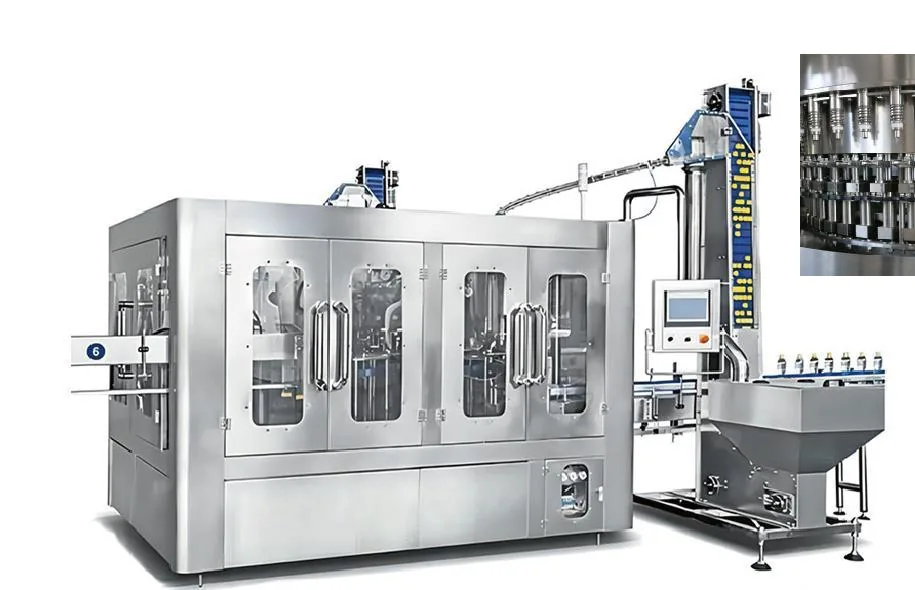
01
Use the same function list for every offer. A machine may automate its own cycle while receiving materials or handing over finished packs manually.
| Function | Automation to specify | Operator or site duty to retain in the plan |
|---|---|---|
| Bottle supply | Approved bottle feeding/unscrambling or a specified blowing-and-transfer system; bottle-present and shortage signals. | Replenish bottles or preforms; maintain approved container quality and storage. |
| Rinsing, filling and capping | Container transfer, the selected rinse/fill/closure process, cap supply, recipe settings and agreed fault handling. | Load caps, inspect product and closures, clean equipment and manage change parts. |
| Labeling and coding | Selected label application, production marking and any agreed verification/rejection functions. | Load labels or consumables, approve artwork/codes and check format changes. |
| Secondary packing | Grouping, wrapping, tray or case handling and pack discharge for the selected pattern. | Replenish film/cartons/trays and remove finished packs unless that handling is also automated. |
| Pallet and line controls | Define any palletizing, conveyors, accumulation, upstream/downstream permissions, alarms and operating data. | Provide pallets, warehouse movement, maintenance and named responsibility for interfaces. |
02
Illustrative line-balance example: a filler is being evaluated at 6,000 bottles/hour for one bottle format. A downstream packer is specified at 8 packs/minute for an agreed pack. These values are planning assumptions, not an offer or guaranteed plant performance.
| Pack case | Bottle-equivalent packing rate | Decision |
|---|---|---|
| 12 bottles per pack | 8 × 12 × 60 = 5,760 bottles/hour | Packing is below the 6,000 BPH filler basis even before operating losses. Resolve this mismatch or lower the agreed line output. |
| 6 bottles per pack | 8 × 6 × 60 = 2,880 bottles/hour | At the same assumed pack-cycle rate, changing the pack halves bottle throughput. Request a format-specific speed confirmation. |
| Packing demand at 6,000 BPH | 6,000 ÷ 12 ÷ 60 = 8.33 packs/minute for a 12-pack | Matching this arithmetic leaves no allowance for stops or recovery. Define the required operating performance and evidence. |
| Temporary stop | Conveyor storage can absorb a limited interruption | Accumulation does not increase sustained packing capacity; calculate both buffer time and recovery capability. |
03
Make one integration owner responsible for the interface register, even when machines come from several suppliers. The technical agreement should say who supplies, programs, tests and documents each connection.
Confirm bottle and pack geometry, neck handling where used, conveyor elevations, transfer gaps, direction and usable accumulation. Approved samples and drawings must match the tested format.
Document run/stop, ready, blocked and starved conditions, speed coordination, alarms and recovery states. Agree safe recovery procedures; do not assume an automatic restart is appropriate.
Identify which settings and mechanical parts change for each bottle, cap, label and pack. Record recipe ownership, access controls, backups and the agreed changeover verification.
Provide specified power, air, cooling and process-water conditions at named connection points. Define what production, reject and downtime data are available and how the buyer can access them.
04
Agree the protocol before manufacturing is complete. Test conditions, materials, duration, sampling, permitted stops and acceptance limits belong in the approved project documents.
| Test or record | What it demonstrates | What to document |
|---|---|---|
| Representative formats | The selected bottle, closure, label and pack can run together. | Approved materials, recipes, change parts, measured output and package-quality records. |
| Normal replenishment | The line can be operated with the agreed material-loading and removal tasks. | Who replenishes which materials, interruptions and operating conditions during the observed run. |
| Controlled interruption and recovery | The defined line permissions and recovery sequence behave as agreed. | Use an authorized safe test plan; record alarms, product handling, restart steps and outstanding actions. |
| Format changeover | The agreed conversion work produces acceptable first-off and subsequent packs. | Start/finish boundaries, people, tools, adjustment sequence, checks and recorded changeover time. |
| Site acceptance | The installed system works with the actual site utilities and interfaces. | Separate factory test evidence from installation, site tests, training and handover closeout. |
05
Compare the same annual saleable output and scope, including the support costs that move with the decision.
Connected feeding and packing may remove repeated handling. Check that packaging quality, utility reliability and maintenance support can sustain that operating model.
Recipe control and repeatable changeovers may matter more than a higher headline speed. Include cleaning, startup rejects and the people needed to change formats.
Verify retained-machine controls, geometry, capacity and documentation before assigning them to a new automatic line. Define shutdown and tie-in responsibilities.
Compare installed investment, operators and technical support, materials, utilities, spares and expected downtime using stated assumptions. Automation alone does not prove lower cost per saleable bottle.
Buyer questions
No. Material loading, inspection, sanitation, changeovers, fault recovery, maintenance and warehouse work remain unless their specific automation is included and demonstrated. Request a task list alongside the machine list.
No. Purchased-bottle plants do not require blowing, and end-of-line pallet handling may be manual or separately automated. Confirm inclusions, options and exclusions in the equipment and responsibility schedules.
They may be, when physical transfers, operating signals, speeds, safety responsibilities, documentation and test obligations are compatible. Name the integration owner and verify the interfaces before committing to the combined line.
Not necessarily. Bottle geometry, fill volume, closure, label method, pack count and change parts can change performance. Ask for an output row and test basis for every commercially important combination.
Use the same product mix, annual saleable volume and required pack quality. Compare installed scope, manual tasks, cleaning/changeover time, utilities, spares and maintenance capabilities as well as equipment price.
Move this project question forward
Share the functions you want automated and the formats you need to sell. The next discussion can then identify machine, control and site interfaces rather than relying on one headline BPH.
Not sure which data matters? Send what you have and state the decision you need to make.
Send target capacity and SKUs, source-water report, site utility schedule, building layout and required project milestones.
The project desk can identify missing inputs and a practical next step. Final engineering, configuration, compliance and commercial terms remain project-specific.
Allot Tech (Suzhou) Co., Ltd. · sales@allottech.com · Project telephone: +86 186 6213 1120 / +1 818 262 0958