Utilization
Model realistic production days, shifts, changeovers, cleaning, maintenance and demand rather than assuming every nameplate hour is sold.
Factory planning for water bottling projects
Budget the complete factory
Water bottling plant cost has four useful totals: production equipment, delivered equipment, an installed plant and the cash needed to launch operations. Use the budget worksheet with current quotations, then compare the configuration choices that change both investment and daily operating cost.
Answer first
Start with treatment, bottle supply, filling and packing equipment. Add freight and destination costs to obtain delivered cost; add rooms, utilities, local installation and commissioning for installed cost; then add trial materials, launch inventory and remaining working capital for startup funding. Exclude inventory already counted from the working-capital row and count included services once.
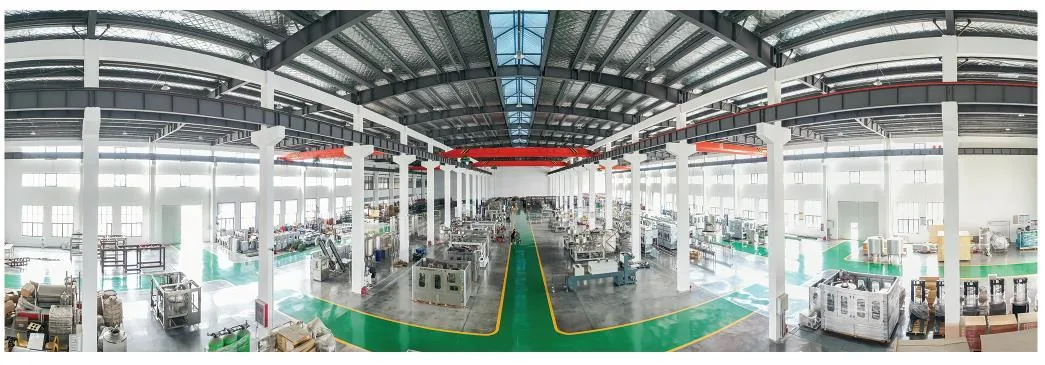
Equipment references from the 2026 catalog
These are representative Allot Tech catalog images. Final models, performance and interfaces remain project-specific and follow the signed technical scope.
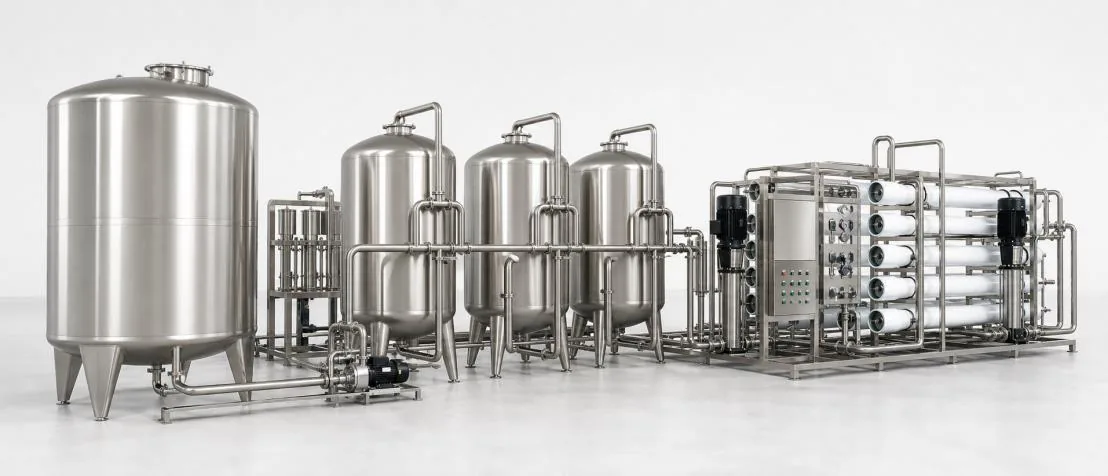
Raw-water evidence, product requirements, storage and sanitation define the treatment duty before a quotation is comparable.
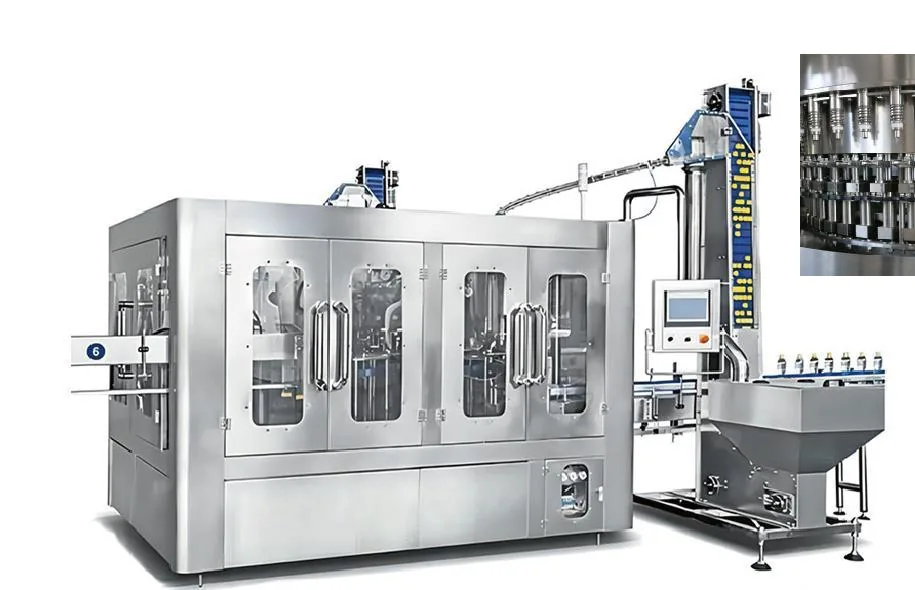
Bottle, cap, net output, materials, cleaning method and line interfaces must be tied to the selected filling configuration.
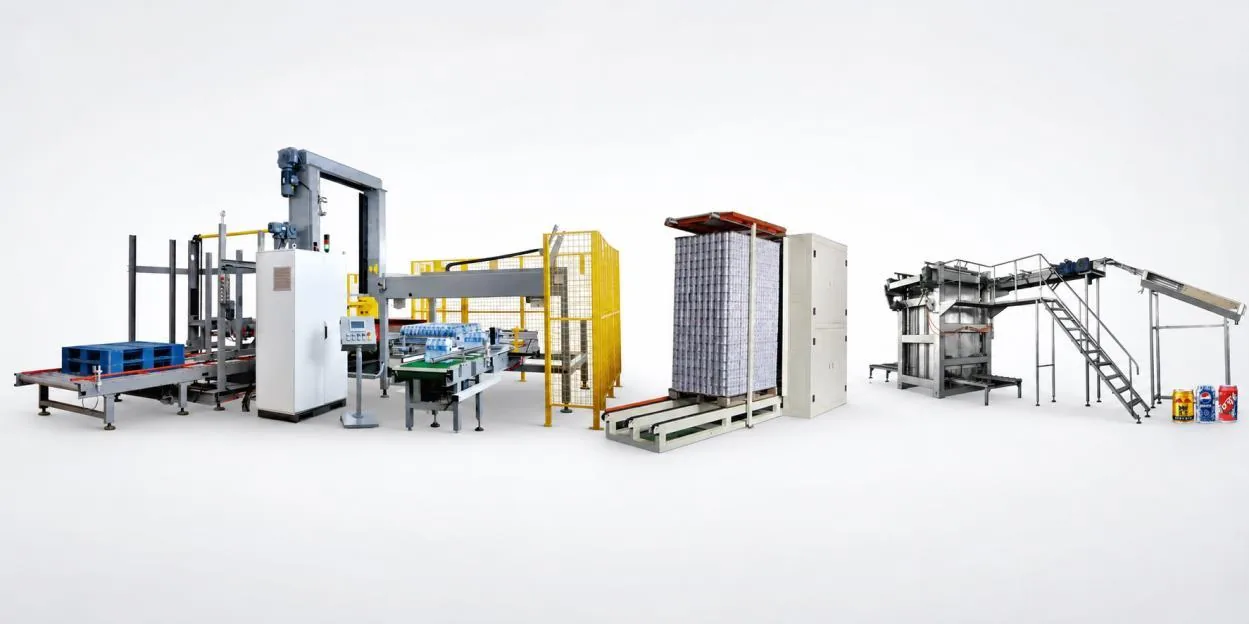
Labeling, packing, accumulation, pallet movement and warehouse flow must support the same saleable-output basis as the filler.
Project budget calculator
Enter project-specific values in one currency. Blank budget amount fields count as zero; keep unpriced items on an open-cost list. Negative amounts or invalid percentages must be corrected. The worksheet does not supply market prices or replace a financial feasibility study.
Preliminary funding total
—in the selected currencyEquipment + delivery + local works + startup + working capital + entered contingency. Financing cost, tax treatment and cash-flow timing require separate review.
Use the result correctly: compare scenarios and expose missing budget categories. It is not a supplier quotation, guaranteed investment amount, profit forecast or recommendation.
Operating-cost worksheet
Use your own current local quotations and accounting basis. Unit inputs should use the currency selected above and be stated per bottle.
Input-based operating cost
—per saleable bottleVariable inputs ÷ saleable yield + entered annual fixed cost ÷ annual saleable bottles. Excludes any category you leave at zero.
Accounting boundary: decide whether depreciation, financing, taxes, distribution, sales commissions, administration and owner compensation belong in this worksheet or in a separate financial model.
01
Use one currency and quotation date for the comparison. The rows below define the budgeting method; they are not a published equipment price or a local tax estimate.
| Budget total | Calculation boundary | Useful decision | Common double count to remove |
|---|---|---|---|
| Equipment | Selected machinery + required options + included change parts and services | Can the proposed scope make the specified product and pack? | Auxiliaries already included in a machine package |
| Delivered equipment | Equipment + freight, insurance and applicable destination handling/import items outside the quote | What must be funded before equipment reaches the site? | Freight or delivery charges already included under the quoted terms |
| Installed plant | Delivered equipment + building adaptation + utility generation/distribution + local works + installation and commissioning outside the quote | What is needed to bring the factory into service? | Installation or utility equipment appearing in both supplier and local-contractor offers |
| Startup funding | Installed plant + trial materials + launch stock + remaining working capital excluding that stock + separately justified contingency | What cash is needed before routine customer receipts support operations? | Trial materials, starter spares or inventory included in another row |
02
Illustrative arithmetic only: all amounts below are assumed currency units (CU), not current prices, a supplier offer or a typical investment range. Enter the nine rows in the budget calculator using Other currency. Replace each assumption with a dated quotation or a documented local allowance before using the result.
| Budget input | Illustrative CU | Scope boundary |
|---|---|---|
| Quoted production equipment | 150,000 | The defined equipment package only. |
| Options and change parts | 5,000 | Only items outside that package. |
| Packing, freight and inland delivery | 12,000 | Only charges outside the delivery terms. |
| Import taxes, duties and port costs | 8,000 | Placeholder; actual destination treatment remains unconfirmed. |
| Building and civil work | 20,000 | Measured local adaptation scope. |
| Utility generation and distribution | 15,000 | Exclude utilities already in the equipment quote. |
| Installation, travel and local labor | 10,000 | Exclude included supplier services. |
| Startup spares and test materials | 5,000 | Count trial materials and starter spares once. |
| Launch inventory and remaining working capital | 25,000 | Inventory plus other working capital, without duplicating that inventory. |
| Entered subtotal | 250,000 | Sum of the nine entered rows. |
| Illustrative 10% contingency | 25,000 | This calculator applies the percentage to the whole subtotal; this is an example, not a recommended reserve. |
| Preliminary funding total | 275,000 | 250,000 + 25,000. Financing and payment timing still require a separate schedule. |
03
A second illustrative CU example shows why headline prices cannot be compared alone. Assume both proposals have already passed the same bottle, pack, output and acceptance requirements. The added rows below are outside each quoted package. Unknown prices must remain open; zero is appropriate only when the scope is explicitly included or genuinely has no additional charge.
| Normalized scope | Proposal A: assumed CU | Proposal B: assumed CU |
|---|---|---|
| Quoted package | 100,000 | 118,000 |
| Required utility equipment outside quote | 15,000 | 0 — included |
| Freight and delivery outside quote | 12,000 | 10,000 |
| Agreed startup services outside quote | 8,000 | 0 — included |
| Same local adaptation scope | 15,000 | 15,000 |
| Comparable subtotal | 150,000 | 143,000 |
| Decision | Headline A is 18,000 lower. | Normalized B is 7,000 lower in this example; review unresolved terms before selecting either. |
04
Compare the same product, daily saleable demand and final pack across alternatives. An option that lowers the first machinery payment can increase storage, handling or recurring operating work.
| Choice | Initial investment effect | Operating effect | Compare using |
|---|---|---|---|
| Buy empty bottles or blow from preforms | Purchased bottles avoid a blowing package; in-house blowing adds molds, air and cooling | Bottle freight and storage trade against preforms, utilities, labor and maintenance | Delivered container cost, stock days, output and available factory services |
| Manual or automatic secondary packing | Manual work can reduce initial automation; automatic packing adds machinery and integration | Staffing, achievable pack output, handling consistency and maintenance differ | Finished packs per hour and realistic staffing per shift |
| One launch format or several formats | Additional formats can require molds, handling parts, label/pack changes and trials | Changeovers and separate material stocks reduce usable production time | Sales mix, change frequency and the formats that must run from day one |
| Adapt an existing building or prepare a new site | Reuse may reduce new construction but add drains, access, floors or utility alterations | Material travel, storage and future expansion may be constrained | A measured building fit-gap and priced local-work list |
05
A traceable price follows a defined plant brief.
| Input | What to provide | Why it changes cost |
|---|---|---|
| Product and source water | Water analysis and product objective | Treatment process and sanitation scope |
| Container and pack | Bottle, cap, label and final pack | Machine format and downstream equipment |
| Output and schedule | Target BPH, shifts and growth plan | Capacity, automation and expansion boundary |
| Site and destination | Building, utilities, country and port | Local work, power basis, logistics and service plan |
06
A lower machine quotation is not automatically a lower-cost factory.
Model realistic production days, shifts, changeovers, cleaning, maintenance and demand rather than assuming every nameplate hour is sold.
Preforms or bottles, caps, labels, film and cartons often dominate ongoing unit cost and inventory needs.
Estimate power, air, water, cooling and treatment consumables from confirmed equipment data and local tariffs.
Allow for training, trial materials, early inefficiency, rejected packs and the time required to establish stable operation.
07
Ask each bidder to connect the selected equipment to the same production schedule. A lower installed price is useful only when the proposed system can deliver the required good output within the operating-cost assumptions.
| Comparison input | Buyer question | How to normalize it |
|---|---|---|
| Packaging consumption | How much material is consumed per saleable bottle, including startup and rejects? | Use the same SKU mix and good-output denominator; separate purchased material from recoverable scrap. |
| Utility consumption | Which equipment and operating states are included? | Compare measured or supported consumption over the same schedule; separate connected load from energy used. |
| Labor and maintenance | Which tasks and shifts must the owner staff, and what recurring work is assumed? | Use the same operating hours, local wage basis and included service scope. |
| Life-cycle comparison | Could extra investment reduce verified recurring costs? | Use one study period and test low/base/high assumptions with the ownership-cost worksheet below. |
Buyer questions
No single price is technically honest without product, bottle, output, scope, site and destination inputs. A written equipment list and responsibility matrix make quotations comparable.
Utility generation, local piping and cabling, building work, freight and import costs, trial materials, installation readiness, spares and ramp-up are common omissions.
Send the plant brief and mark unknown items. The next response can identify the missing decisions before a project-specific scope is priced.
Compare the normalized total project boundary. A low equipment price can exclude utilities, conveyors, local installation materials, startup support or essential packaging functions.
BPH does not define raw-water treatment, bottle production, packaging, redundancy, destination costs, building work or the level of automation and service.
No. Zero in the calculator means no amount has been included. Keep an unknown item in a separate clarification list with an owner and due date; do not treat the calculated subtotal as a complete funding requirement until material gaps are resolved.
Move this project question forward
Send the equipment boundary, available quotations and the items still unpriced. The next step is to separate included scope, local work and startup funding before comparing totals.
Not sure which data matters? Send what you have and state the decision you need to make.
Send target capacity and SKUs, source-water report, site utility schedule, building layout and required project milestones.
The project desk can identify missing inputs and a practical next step. Final engineering, configuration, compliance and commercial terms remain project-specific.
Allot Tech (Suzhou) Co., Ltd. · sales@allottech.com · Project telephone: +86 186 6213 1120 / +1 818 262 0958