How to Plan and Verify Bottled-Water Label Regulatory Review
Verify identity, source, composition, quantity, lot and market statements before artwork release for each destination. Visually correct artwork can contain an unsupported claim, outdated requirement or mismatch with the approved product specification.
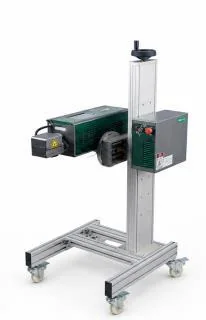
Allot Tech catalog reference for traceable production marking. Coding and quality records must follow the destination and project requirements.
01
Define the decision boundary: Destination market, Product identity, Source statement
Start by stating the decision, the physical and organizational boundary, the product and operating state, and the evidence owner. This page treats Bottled-Water Label Regulatory Review as a specific plant control within sampling, measurement, review, disposition and record retention; it is not a universal equipment recommendation or a substitute for the current local requirement.
Destination market
Define how Destination market represents the real plant condition before using it to decide Bottled-Water Label Regulatory Review. Record source, date, method, units, range and owner. If the input is provisional, show the test or clarification that will close it and the consequence if it changes.
Product identity
Connect Product identity to Destination market and the intended product. Separate a verified fact from a supplier assumption or design allowance. The project record should show which variation has been observed and which adverse case still needs a controlled challenge.
Source statement
Use Source statement to make the decision boundary observable. Assign the review to quality, laboratory, operations and authorized release personnel and identify who can hold the decision when information conflicts, expires or no longer represents the installed process.
02
Build a plant-specific method: Ingredient or mineral declaration, Net quantity, Manufacturer information
Translate the decision into a sequence that can be witnessed. Ingredient or mineral declaration establishes the relevant condition, Net quantity defines the selected control, and Manufacturer information shows how that control is applied. Compare options against the same product, package, throughput and site basis; otherwise the apparent technical difference may only be a changed assumption.
Ingredient or mineral declaration
Describe the normal range and a credible unfavorable condition for Ingredient or mineral declaration. Explain how that condition is created, observed or sampled without endangering people or product. A catalog value or one favorable commissioning result does not define the whole operating envelope.
Net quantity
State the exact duty assigned to Net quantity and the upstream and downstream interfaces it depends on. Identify capacity, compatibility, hygiene, access, control and lifecycle constraints that could make the selected method unsuitable for Bottled-Water Label Regulatory Review.
Manufacturer information
Write the method for Manufacturer information before the acceptance run: prerequisites, sequence, observation points, instruments, raw results, deviation handling and approval. Preserve actual observations instead of replacing them with a pass mark.
Decision element
Question to answer
Failure if omitted
Evidence to retain
Destination market
Does the input represent the approved scope and adverse case?
The method is sized or judged against the wrong basis.
Controlled source record, range and open assumptions
Net quantity
Does the selected control have a defined duty and operating window?
A component claim is mistaken for system performance.
Design rationale, interface review and qualification evidence
Language
Can loss of control be detected before unverified release?
Affected product or equipment continues without a decision.
Challenge result, alarm response and bounded disposition
Change control
What change or result reopens the decision?
An obsolete acceptance basis remains in use.
Approved review trigger and current decision record
03
Challenge loss of control: Lot and date code, Claims, Language
The challenge should examine a credible mechanism rather than merely repeat a successful normal run. Define the affected time, material, circuit, machine state or lot; show how the plant detects the event; and prevent release until the evidence chain supports recovery.
Lot and date code
Challenge Lot and date code at the point where it can change the decision. Use a safe simulation, historical excursion, controlled sample or calculation appropriate to the risk. Record limitations so the result is not stretched beyond the tested case.
Claims
Connect Claims to detection and containment. State what stops automatically, what an operator must recognize, which material or equipment state is held, and how the last demonstrated acceptable condition is located.
Language
Use Language to decide whether the control still works. A repeated favorable sample alone does not explain the original event. Require cause, correction, impact review and a defined confirmation of restored control.
04
Accept, maintain and re-open the decision: Barcode if required, Approval proof, Change control
Destination-specific checklist, product and source evidence, controlled legal or regulatory review, approved proof and change history. Acceptance should identify the approved operating basis, actual results, deviations, residual actions and decision authority. The record must remain useful to operations after the supplier leaves and must show when a change in source, material, equipment, software, utility, method or market requirement requires review. Methods, decision rules and compliance limits must be confirmed for the current product, market and competent authority.
Barcode if required
Define the disposition logic for Barcode if required: accept, conditionally accept, hold, correct, reject or collect more evidence. State the role authorized to make that decision and keep commercial schedule pressure separate from technical closure.
Approval proof
Retain Approval proof in a form that another qualified reviewer can reconstruct. Link instruments, raw data, versions, samples, photographs, drawings, work orders or test steps to the conclusion rather than storing an isolated summary.
Change control
Make Change control an explicit lifecycle trigger. Define who reviews the change, which assumptions and tests remain valid, what must be repeated, and how affected product or equipment is controlled until the revised basis is approved.
R
References and verification boundary
These sources support the risk-control method on this page. They do not set project-specific legal limits, test frequencies, engineering values or approvals; verify the current edition and local applicability before a decision.
What must be known before approving Bottled-Water Label Regulatory Review?
At minimum, confirm Destination market, Product identity and Source statement for the actual product, process and site. Mark missing evidence as an owned action with a consequence; do not invent a precise input to make the decision appear complete.
How should Net quantity be tested?
Test it under the same defined scenario used for Ingredient or mineral declaration and observe Manufacturer information, Lot and date code and the downstream decision. The protocol should state prerequisites, instruments, raw observations, acceptance logic and deviation handling before execution.
What happens if Claims loses control?
Hold the affected boundary, use Language to locate impact, investigate the mechanism and document correction. Release or restart only through the authorized route represented by Barcode if required and the retained evidence.
Can a supplier document replace site verification?
It may support material, component or design capability, but it does not automatically prove the installed system under real utilities, product, operators and adverse conditions. Assign factory and site evidence according to risk and test feasibility.
When must Bottled-Water Label Regulatory Review be reviewed again?
Re-open the decision when Change control occurs, a trend leaves the approved range, an unexplained failure appears, or a relevant requirement changes. Record what remains valid and what requires new evidence.
Move this project question forward
Need to resolve How to Plan and Verify Bottled-Water Label Regulatory Review for your water bottling plant?
Visually correct artwork can contain an unsupported claim, outdated requirement or mismatch with the approved product specification.
Not sure which data matters? Send what you have and state the decision you need to make.
2. Attach the decision inputs
Destination market
Ingredient or mineral declaration
Lot and date code
Barcode if required
Send the applicable product standard, laboratory results, critical limits, reject data and customer-complaint patterns.
3. Confirm the next planning step
The project desk can identify missing inputs and a practical next step. Final engineering, configuration, compliance and commercial terms remain project-specific.