How to Run a Bottled Water Mock Recall and Lot Reconciliation
A mock recall is a timed test of whether the plant can convert one credible trigger into an accurate product boundary, stop further movement, trace backward and forward, contact the right parties and reconcile all affected quantity. It is not a search for a perfect spreadsheet and it is not a real recall. Select an approved scenario that challenges the system without alarming customers or authorities, define exercise safeguards and start the clock from information that an operator or quality team could genuinely receive. Traceability principles and applicable recall-plan rules guide the exercise, but real-event decisions, public communication and legal reporting must follow current competent-authority advice.
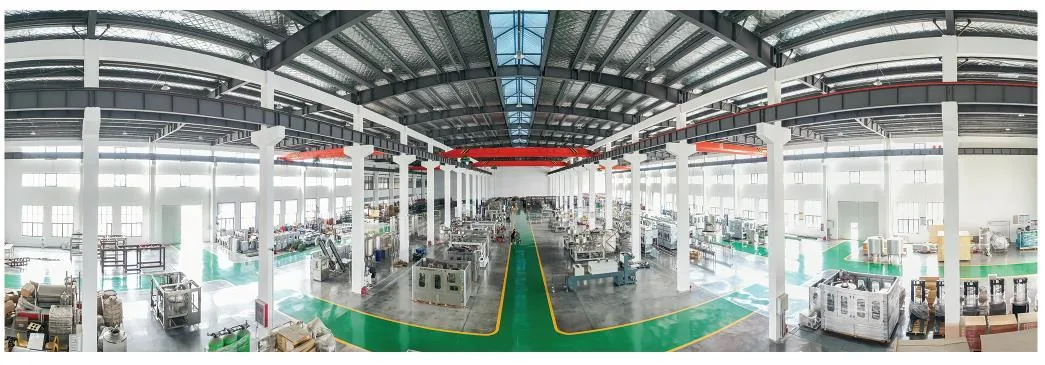
Real manufacturing reference from the Allot Tech Beverage Bottling Catalog 2026. Final equipment and layout remain project-specific.
01
Design a scenario that reveals system capability
Choose a finished lot and trigger that crosses meaningful records, shifts or storage locations. Set a controller, observers, start condition, exercise-only communication convention and clear stop criteria. The team being tested should receive only information it would reasonably know at that moment; feeding it the answer defeats the purpose.
Select a bounded challenge
Use a plausible packaging, source, treatment, sanitation, supplier or test trigger approved by quality leadership. Define whether the exercise starts from finished product, a material lot or a process interval. Avoid a scenario that requires fabricated customers or public-health claims.
Set exercise safeguards
Mark all messages clearly as an exercise, use preapproved internal or test contacts, prevent accidental external notification and protect confidential customer data. Designate one controller who can stop the exercise if it interferes with production or resembles a real event.
Define success dimensions
Measure accuracy, completeness, decision quality, contact effectiveness, quantity reconciliation and elapsed time against the site's authority-defined or risk-approved objectives. Do not borrow an arbitrary universal completion time. Record intermediate milestones so delays can be diagnosed.
Freeze the initial facts
Issue a short trigger statement with date, source and known evidence. Log every later information release. This distinguishes a traceability failure from a question the team could not answer because the exercise never provided necessary facts.
02
Run backward and forward traces from one controlled lot boundary
The recall coordinator should establish the suspect production interval using coding logic, process state and material use rather than assuming the printed lot alone is sufficient. Trace backward to water, packaging and critical process evidence; trace forward to warehouses, customers and remaining stock. Keep source records and query outputs in an exercise file.
Confirm code interpretation
Decode date, line, shift, time or sequence fields and verify clock alignment where relevant. Check rework, startup product, code changes, overruns and mixed pallets. If the same visible code covers several states, document the conservative boundary and improvement need.
Trace inputs backward
Identify source-water interval, treatment and release records, tanks or circuits, cleaning state, packaging and ingredient lots, operators and critical maintenance. Follow only evidence relevant to the scenario while noting inaccessible or ambiguous records.
Trace distribution forward
Locate finished pallets in line accumulation, warehouse, third-party logistics, transit, customer delivery and returns. Record quantity and status at each location. Verify customer identity and contact details from current master data rather than an old emergency list.
Test decision escalation
Observe who defines scope, who can place stock on hold, who evaluates expansion and who authorizes communication. A fast product list is insufficient if the organization cannot convert it into a controlled action.
Exercise clock point
Evidence requested
Owner
Recorded outcome
Trigger received
Source, initial fact pattern and authenticity check
Recall coordinator
Start time and initial risk questions
Lot boundary set
Code logic, process interval and adjacent-lot rationale
Quality with production
Included and excluded lots with reason
Trace completed
Input records, stock locations and distribution query
Trace team
Quantity by status and data gaps
Exercise closed
Effectiveness checks, reconciliation and action log
Authorized management
Approved findings and due dates
03
Reconcile mass and test whether contacts can act
Quantity reconciliation is more than adding invoices. Start with documented production, subtract known process losses only when records support them, and account for every unit as on site, shipped, returned, destroyed, sampled or otherwise dispositioned. Differences reveal coding, inventory or data-interface weaknesses that a contact percentage can hide.
Build a single quantity equation
Use consistent units and conversion factors for production, cases, pallets and loose bottles. Preserve the source for each number. Treat unexplained variance as a finding rather than forcing the equation to equal by inserting an estimated loss.
Separate location from disposition
A pallet can be located yet unavailable for control, or held on site without a final disposition. Record physical or system location, custody, hold status, communication state and response separately so management understands actual recovery capability.
Conduct effectiveness checks
Use controller-approved test contacts to ask whether the message reached the correct role, was understood and could be acted on. Record unavailable contacts, obsolete details and unclear instructions. Do not send a simulated recall to unsuspecting external recipients.
Challenge third-party records
Where a warehouse or logistics provider is in scope, test the approved exercise interface and data format. Confirm time zones, lot-field mapping, stock status and escalation contacts. Contract language alone does not prove operational retrieval.
04
Close gaps as controlled improvements, not exercise theater
Hold a debrief promptly while evidence is fresh. Separate scenario limitations from real system failures, rank findings by potential consequence and assign owners. A mock recall is complete only when actions are verified or formally risk-accepted—not when the exercise report is signed.
Preserve the chronology
Compile initial facts, calls, queries, decisions, quantity versions and milestone times. This shows where work waited for authority, data or people. Avoid rewriting the timeline into a cleaner story after the event.
Classify root causes
Determine whether gaps arose from code design, master data, record capture, system integration, training, role authority, third parties or scenario construction. Correcting a phone number will not solve a recurring ownership or lot-boundary problem.
Verify corrective actions
Retest changed queries, contacts, procedures or coding at an appropriate scale. Preserve evidence that the change works under normal access and staffing conditions. Carry unresolved high-impact gaps into management risk review.
Set the next challenge strategically
Choose future exercises based on risk and previous weaknesses: another shift, a supplier-origin trigger, a distributed lot or a system outage. Frequency and scope should follow applicable requirements and the site's approved readiness program, not an invented global schedule.
R
References and verification boundary
These sources support the risk-control method on this page. They do not set project-specific legal limits, test frequencies, engineering values or approvals; verify the current edition and local applicability before a decision.
No. It is a controlled exercise. A real event requires immediate risk assessment, authority engagement and communication under current law and the site's emergency procedures.
Should customers be contacted during the exercise?
Only through a preapproved safe method, such as designated test contacts who know the message is simulated. Never create confusion or disclose false product-risk information.
What if all product is located but quantities do not reconcile?
Record the variance as a finding, verify units and source records, and investigate inventory, loss, sample, rework and data-interface causes. Do not declare success based on location alone.
Can one exercise test every failure mode?
No. Select a meaningful scenario and rotate future challenges based on risk, process change and prior gaps. Overloaded exercises make causes difficult to diagnose.
What evidence is needed to design a mock recall?
Provide lot-code logic, process and material records, inventory and distribution data, recall roles, contact lists, third-party interfaces, current objectives and previous findings.
Move this project question forward
Need to resolve How to Run a Bottled Water Mock Recall and Lot Reconciliation for your water bottling plant?
Quantity reconciliation is more than adding invoices. Start with documented production, subtract known process losses only when records support them, and account for every unit as on site, shipped, returned, destroyed, sampled or otherwise dispositioned. Differences reveal coding, inventory or data-interface weaknesses that a contact percentage can hide.
Not sure which data matters? Send what you have and state the decision you need to make.
2. Attach the decision inputs
Select a bounded challenge
Confirm code interpretation
Build a single quantity equation
Preserve the chronology
Send target capacity and SKUs, source-water report, site utility schedule, building layout and required project milestones.
3. Confirm the next planning step
The project desk can identify missing inputs and a practical next step. Final engineering, configuration, compliance and commercial terms remain project-specific.