Production equipment
List the water process, bottle supply, filling, labels, coding, packing and their required auxiliaries. Identify change parts and starter spares separately.
Factory planning for water bottling projects
Equipment choices for the complete factory
A small water bottling plant needs a complete route from source water to a saleable pack. Start by choosing how bottles arrive, how much good product each shift must deliver and which handling tasks the team can sustain. Then select the machines around that operating plan.
Answer first
For still water in purchased PET bottles, plan suitable water treatment and hygienic storage, protected bottle feeding, rinsing-filling-capping, labeling, coding, packing and transfer to storage. Add bottle blowing, molds and its specified air and cooling services only if bottles will be made onsite. Manual handling can reduce selected automation purchases, but it still needs an achievable task and quality-control plan.
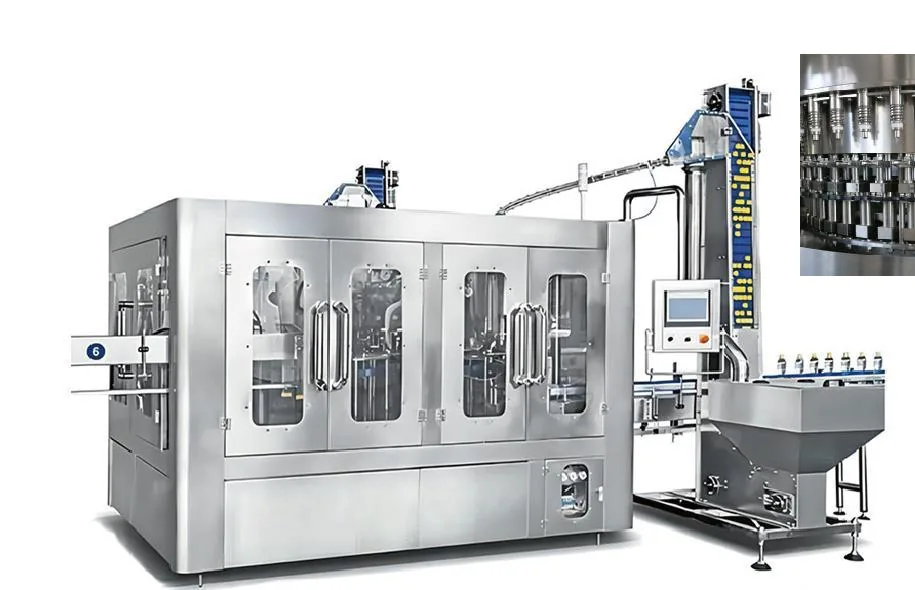
01
These are configuration choices, not fixed models or stock packages. Treatment follows the source-water evidence and intended product in every route.
| Configuration | Equipment and operating route | When to consider it | What can limit it |
|---|---|---|---|
| Purchased bottles; selected manual handling | Protected bottle supply, suitable filling/capping equipment, labeling and coding, then manual or assisted finished-pack handling. | Bottle supply is dependable and the required replenishment and packing tasks can be demonstrated at the intended output. | Storage volume, repetitive handling, breaks and pack collection can stop an otherwise capable filler. |
| Purchased bottles; connected packing | Bottle feeding, rinsing-filling-capping, conveying, labeling/coding and selected automatic grouping or packing. | Repeat demand justifies reducing handoffs and the team can support the machines and packaging materials. | An automatic filler does not remove cap, label, film, carton or pallet replenishment. |
| Bottles made onsite | Add preform handling, a compatible blower and molds, bottle transfer, air treatment/compression and cooling specified for that equipment. | Delivered empty-bottle cost or supply constraints justify the complete bottle-making operation. | The additional power, air, cooling, heat removal, technical skills and maintenance must fit the site. |
02
Illustrative planning example, not a machine specification: the business needs 6,000 saleable bottles per day. An 8-hour shift reserves 2 hours for planned cleaning, setup and breaks, leaving 6 scheduled production hours. A separate 80% planning factor allows for short stops and quality loss during those 6 hours; do not subtract the same loss twice.
| Step | Calculation | Meaning for the purchase |
|---|---|---|
| Average saleable output | 6,000 ÷ 6 = 1,000 bottles/hour | The entire operation must deliver this average during scheduled production. |
| Preliminary equipment-rate basis | 6,000 ÷ (6 × 0.80) = 1,250 BPH | Use this as a discussion input, then verify actual format performance and operating losses. |
| 12-bottle packing demand | 6,000 ÷ 12 = 500 good packs/shift | Packing and removal need a sustainable task plan; the daily average alone does not prove they can absorb bursts. |
| One fewer production hour | 6,000 ÷ (5 × 0.80) = 1,500 BPH | A late start or longer clean changes the requirement without changing the sales target. |
03
There is no reliable operator count based on BPH alone. Map simultaneous tasks, walking distances, replenishment, quality checks and relief cover, then observe whether the proposed arrangement can sustain a representative run.
| Work point | Evidence to collect | Possible equipment decision |
|---|---|---|
| Bottle and cap feeding | Replenishment frequency, protected staging and time away from the filling zone. | Manual feeding, a feeding table or suitable automatic feeding with sufficient replenishment capacity. |
| Labeling and coding | Format changes, material loading, print checks and rejected-bottle handling. | Choose the label method and coder for the approved bottle, label and traceability requirements. |
| Finished packing | Pack pattern, grouping time, film/carton changes, lifting and collection route. | Compare assisted packing with automatic grouping/wrapping or case packing; include the real pack material. |
| Pallet and warehouse handoff | Pack buildup, pallet exchange, movement routes and dispatch timing. | Reserve staging and handling access before buying a faster filler. |
04
Separate the initial machinery purchase from the work and cash needed to operate it. Ask which items can remain useful if demand grows.
List the water process, bottle supply, filling, labels, coding, packing and their required auxiliaries. Identify change parts and starter spares separately.
Price the actual electrical connections, air, cooling, drains, sanitary transfer, equipment access and protected material storage. A compact machine footprint is not the whole factory area.
Allow for freight and destination handling, agreed site services, initial bottles or preforms, caps, labels, film/cartons, testing and working capital using current local inputs.
Record what would justify a second shift or new machine. Check whether treatment, conveying, packing and utilities can support that step before reserving an expansion space.
05
A useful proposal can start with known inputs and clearly marked open questions. Include the lowest practical operating scope and the expansion step you want evaluated.
| Input | What to send |
|---|---|
| Product and water | Intended product, water source and available analysis; identify treatment already installed. |
| Bottle supply | Purchased bottles or onsite blowing preference; bottle/preform and cap drawings or samples when available. |
| Daily output and pack | Saleable bottles per day, shifts, planned cleaning/changeover time and bottle count per pack. |
| Site and team | Building dimensions and access, available utilities, material storage and tasks the operating team will handle. |
| Commercial boundary | Destination, required installation/training, existing assets proposed for reuse and the next expansion scenario. |
Buyer questions
No. A small plant can use automatic filling or connected packing when repeat demand, labor, material consistency and the site justify it. Choose automation by the tasks it removes and the new support duties it creates.
Yes as a planning route, provided bottle compatibility, future transfer, utilities, floor space and the changeover project are checked. Do not assume the original feeder, filler or building will accept every later blower arrangement.
The useful comparison is the equipment scope plus site preparation, delivery, startup services, materials and working capital. Bottle supply, format, packing and retained equipment change that total. Request a dated quotation against one defined brief rather than comparing unrelated machine prices.
Use a layout and task study for the selected equipment. Include receiving, packaging-material stock, cleaning and quality work, maintenance access, finished goods and simultaneous operator duties. A machine footprint or BPH label alone cannot establish either figure.
Returned containers need their own inspection, washing, clean-container handling and distribution plan. Use the dedicated 5-gallon/large-container route and verify jar and closure dimensions rather than scaling up the small-PET example.
Move this project question forward
Send your daily output and bottle-supply choice so the equipment discussion can include packing, people, storage and the next growth step.
Not sure which data matters? Send what you have and state the decision you need to make.
Send target capacity and SKUs, source-water report, site utility schedule, building layout and required project milestones.
The project desk can identify missing inputs and a practical next step. Final engineering, configuration, compliance and commercial terms remain project-specific.
Allot Tech (Suzhou) Co., Ltd. · sales@allottech.com · Project telephone: +86 186 6213 1120 / +1 818 262 0958