How to Write a Water Bottling Plant User Requirement Specification
A useful user requirement specification is not a longer request for quotation. It is the owner's controlled statement of what the plant must do, under which defined conditions, who supplies each interface and how compliance will be demonstrated. Start with real product, package, source-water, operating and site evidence; give every important requirement a stable identifier; and name the verification method before proposals arrive. That structure lets the project team compare unlike technical offers without rewarding vague promises. It also preserves the requirement through design review, factory testing, installation, site acceptance and handover. Hygiene guidance, machinery risk assessment and applicable safety rules should inform the URS, while current local law and the site's own risk assessment remain authoritative.
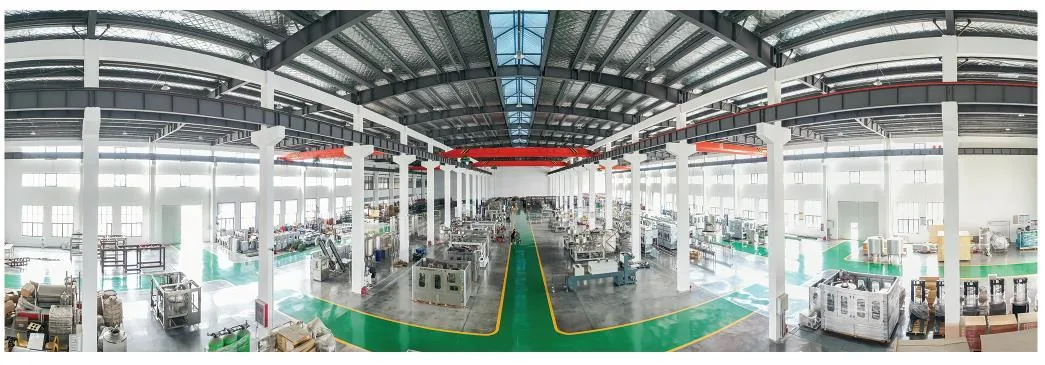
Real manufacturing reference from the Allot Tech Beverage Bottling Catalog 2026. Final equipment and layout remain project-specific.
01
Freeze the operating basis before writing equipment clauses
The URS owner should first approve a compact basis-of-design pack. A machine cannot be judged against an output number if the bottle family, water condition, production pattern and upstream or downstream constraints are still moving. Unresolved assumptions should be visible as open decisions with owners and dates, not silently embedded in a supplier's proposal.
Product and source envelope
List every intended water category and the verified source-water range that may affect treatment, hygiene or materials. Separate current products from possible future products. Require the bidder to identify which input excursions invalidate its design rather than describing the feed simply as potable water.
Container and closure family
Attach controlled drawings or dimensional ranges for bottles, preforms, caps, labels, secondary packs and pallets. State which formats are firm, which require change parts and which are only expansion options. This prevents a nominal bottle-size list from concealing neck, height, stability or label-area differences.
Production duty
Describe sustained saleable output by agreed pack under stated feed, shift, changeover and quality conditions. Keep instantaneous nameplate speed separate from the acceptance duty. Record planned operating hours, sanitation windows and product or format sequence because these conditions affect accumulation, utilities and staffing.
Site and project constraints
Provide confirmed utility characteristics, ambient and elevation data, building limits, access routes, drainage interfaces and local technical requirements. Label each value as measured, authority-defined, project-specific or still provisional. The URS should require the supplier to show consequences where a provisional input changes.
02
Turn business needs into testable requirement statements
Each critical statement should contain one obligation, a defined condition and an observable result. Avoid words such as suitable, adequate, high quality or easy unless a measurable acceptance method follows. A four-column trace register gives procurement, engineering and quality teams one shared record instead of separate lists that drift during negotiation.
Use stable identifiers
Assign an identifier by discipline and sequence, then never recycle it. Design comments, deviations, vendor documents and test records can cite that identifier. If a requirement changes, preserve the revision history and the approval rationale so the final plant is not accepted against an undocumented compromise.
State conditions and exclusions
Write the product, format, operating state, utility condition and relevant boundary directly into the requirement. If performance excludes startup, changeover or sanitation, say so. A bidder should not be able to satisfy a sustained-output requirement with an unloaded dry-cycle demonstration.
Name evidence in advance
Choose document review, calculation, certificate review, inspection, functional challenge, FAT, SAT or a defined performance run according to risk. Evidence must be observable and retained. Supplier declarations alone may support low-risk items but should not replace a challenge where failure affects safety, hygiene or release.
Assign disposition authority
Identify who can accept, reject or approve a deviation: owner engineering, quality, safety, operations or an authority having jurisdiction. Commercial pressure should not silently close a technical exception. Open deviations need impact, compensating control, owner, due date and final evidence.
URS field
Question it must answer
Acceptable evidence
Decision owner
Requirement ID and text
What result is mandatory, and under what condition?
Approved URS revision and bidder compliance response
Owner engineering with affected function
Design basis
Which product, pack, feed and utility envelope applies?
Controlled input register, drawings and analyses
Process owner and quality
Verification method
How will compliance be observed before release?
Review, inspection or test protocol with acceptance basis
Named witness and approver
Deviation status
What differs, what is affected and who accepts it?
Impact assessment, corrective action and closure record
Authorized owner representative
03
Cover interfaces, hygiene, safety and information—not only output
Output clauses receive attention because they are easy to quote, yet many difficult handovers arise at interfaces. The URS should define the whole supplied function: hygienic product path, operator exposure, utilities, controls, documentation, maintainability and responsibilities at every battery limit. Requirements should be proportionate to risk and linked to the site's actual operating model.
Hygienic design and cleanability
Define product-contact material documentation, drainability, access for inspection, cleaning or disinfection interfaces, lubricant controls and protection after treatment. Reference the applicable bottled-water hygiene basis without claiming that a general code automatically approves the final design.
Machine and task safety
Require a documented risk-assessment process covering normal production, adjustment, clearing jams, sanitation, change parts, maintenance and foreseeable misuse. State owner expectations for guards, interlocks, energy isolation information, access platforms and residual-risk communication, subject to current local requirements.
Controls, data and cybersecurity boundary
List required recipes, user roles, alarms, audit or event records, data ownership, backup, remote-access approval and upstream or downstream signals. Define what must happen after power, network, instrument or communications failure. Avoid requesting unlimited remote access merely because it is technically convenient.
Documentation and lifecycle support
Specify language, format and timing for drawings, manuals, spare-parts lists, software backups, calibration evidence, certificates and training records. Link critical documents to payment and acceptance milestones so the team does not discover at handover that essential evidence was treated as optional.
04
Carry the same requirements through bid, FAT, SAT and handover
The trace matrix is a living control document, not an appendix filed after contract award. Update it at bid clarification, design freeze, FAT readiness, shipment, site acceptance and final handover. The project manager should distinguish evidence that can be closed at the factory from evidence that only the installed plant, real utilities and representative materials can prove.
Normalize proposal responses
Require bidders to respond comply, deviate or not applicable against every requirement and to cite supporting proposal sections. Blank responses remain open. Compare exceptions by operational and lifecycle consequence rather than counting how many green cells each proposal contains.
Build witnessable test protocols
Before FAT or SAT, map selected requirement IDs to test steps, instruments, test materials, prerequisites and acceptance logic. Record actual observations and raw results. A signed protocol with missing operating conditions is weaker than a traceable test that shows exactly what was challenged.
Control changes after award
Route design changes through the same requirement register. Assess effects on product safety, capacity, utilities, maintenance, validation and documentation before approval. Informal workshop decisions should be captured promptly so site acceptance does not reopen forgotten tradeoffs.
Close with an evidence index
At handover, export a final matrix showing the approved requirement revision, compliance status, evidence location, open punch item and responsible owner. Do not mark a requirement complete because equipment shipped. Residual items need a risk-based disposition and a dated closure route.
R
References and verification boundary
These sources support the risk-control method on this page. They do not set project-specific legal limits, test frequencies, engineering values or approvals; verify the current edition and local applicability before a decision.
Is a supplier quotation enough to serve as the URS?
No. A quotation describes the supplier's proposed scope; the URS states the owner's controlled need and acceptance basis. The two should be traced, but one should not silently replace the other.
Should the URS specify a particular machine brand?
Usually it should specify required function, interfaces and evidence. A mandated component may be justified by site standardization or an approved constraint, but the reason and equivalency process should be explicit.
What should happen when an input is still unknown?
Record it as a bounded assumption or open decision with an owner and due date. Require the bidder to state sensitivity and consequences; do not invent a precise value merely to make the document look complete.
Which requirements belong in FAT and which in SAT?
Use risk and test feasibility. Factory tests can prove many functions and documents; installed utilities, integrated interfaces, representative product and sustained site operation often require SAT or a separate performance run.
What evidence should an owner send for URS review?
Send the draft URS, product and package matrix, source-water analyses, confirmed utility data, site constraints, operating pattern, applicable local requirements and the current responsibility boundary. Those inputs enable a clause-by-clause gap review.
Move this project question forward
Need to resolve How to Write a Water Bottling Plant User Requirement Specification for your water bottling plant?
Output clauses receive attention because they are easy to quote, yet many difficult handovers arise at interfaces. The URS should define the whole supplied function: hygienic product path, operator exposure, utilities, controls, documentation, maintainability and responsibilities at every battery limit. Requirements should be proportionate to risk and linked to the site's actual operating model.
Not sure which data matters? Send what you have and state the decision you need to make.
2. Attach the decision inputs
Product and source envelope
Use stable identifiers
Hygienic design and cleanability
Normalize proposal responses
Send target capacity and SKUs, source-water report, site utility schedule, building layout and required project milestones.
3. Confirm the next planning step
The project desk can identify missing inputs and a practical next step. Final engineering, configuration, compliance and commercial terms remain project-specific.